

Finding Safety, Support, and a Path Toward Healing
Sexual trauma can affect how you feel about yourself, your relationships, and the world around you. You may feel constantly on guard, disconnected from your body, or overwhelmed by memories you did not choose to revisit. You might also struggle to explain what happened or wonder whether your experiences “count” as trauma.
You deserve support without having to prove how much you have suffered. Whether your experiences happened recently or years ago, therapy can provide space to understand their impact and explore what healing means to you.
At Vargas Counseling & Wellness, I offer compassionate, individualized trauma therapy through telehealth throughout California. My clinical work includes supporting commercially sexually exploited children (CSEC), and I specialize in helping people affected by sex trafficking and sexual trauma.

Understanding Sexual Trauma and PTSD
Sexual trauma can include sexual assault, childhood sexual abuse, coercion, and sexual exploitation. A person who caused harm may have been a stranger, partner, family member, caregiver, or someone who initially appeared caring and trustworthy.
Some survivors develop posttraumatic stress disorder, or PTSD. Symptoms can include unwanted memories or nightmares, avoidance of reminders, persistent negative beliefs or emotions, and feeling unusually alert or reactive. These experiences can interfere with sleep, concentration, relationships, and everyday activities. Not everyone who experiences sexual trauma develops PTSD, but distress still deserves attention.
You do not need to arrive at therapy with a diagnosis. An assessment can help clarify your symptoms and identify appropriate treatment options.
Why Trauma Can Affect Trust and Connection
When someone violates your boundaries, especially within a relationship, it can become difficult to know when closeness is safe. You may want connection while also feeling uncomfortable with affection, vulnerability, or dependence.
Some survivors become highly attentive to other people’s moods. Others withdraw, struggle to say no, or feel disconnected during stressful moments. These responses deserve understanding rather than criticism.
Therapy can help you explore how these patterns developed and whether they still serve your needs. The goal is to build more choice in how you respond, communicate, and relate to others.
Healing does not require forgiving the person who harmed you or rebuilding a relationship with them. Your goals can center on your own safety, boundaries, and well-being.
Understanding Sex Trafficking and Commercial Sexual Exploitation
Sex trafficking is often surrounded by stereotypes that can make survivors’ experiences harder to recognize. Exploitation may involve manipulation, threats, dependency, or an abusive relationship. It does not always resemble the situations portrayed in movies.
For young people, exploitation may occur alongside other adversities, including previous abuse, unstable housing, or disrupted caregiving relationships. The National Child Traumatic Stress Network recognizes child sex trafficking as a severe trauma exposure with potentially extensive effects on health, relationships, and development.
A young person may have complicated feelings toward someone who exploited them. Attachment, fear, grief, and anger can coexist. Those feelings do not make the exploitation their fault.
Support needs to recognize this complexity and avoid blaming youth for the circumstances or survival responses surrounding their exploitation.
How My Work With CSEC Youth Informs My Approach
My work with CSEC youth informs how I approach safety, trust, and engagement in therapy. When someone has experienced manipulation or repeated violations of their boundaries, developing trust with a provider may take time.
I approach this work with respect for each person’s circumstances and readiness. That includes making room for uncertainty, mixed emotions, and conversations that unfold gradually.
My specialization in sex trafficking also brings attention to the broader context of recovery. Emotional healing may need to occur alongside support for housing, physical health, safe relationships, and other practical needs. Therapy can be one part of a larger support network.
Each person’s experience is different. I work collaboratively to understand the concerns they bring, identify meaningful goals, and consider whether additional or specialized services are needed.
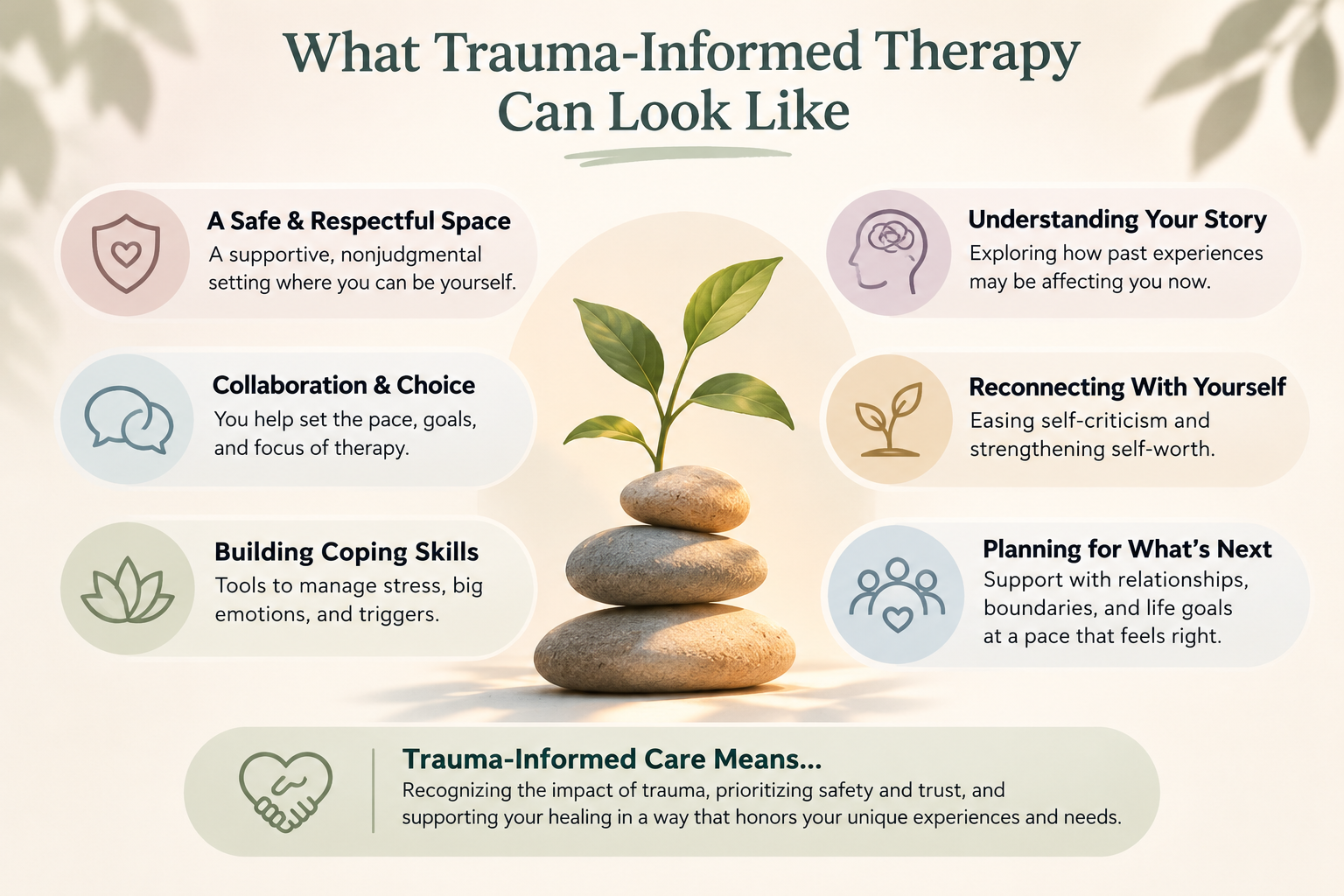
What Trauma-Informed Therapy Can Look Like
Beginning therapy does not mean immediately describing everything that happened. Early sessions may focus on your current concerns, treatment goals, available support, and what helps you feel more grounded.
Together, we may explore emotional triggers, self-critical beliefs, boundaries, and strategies for managing distress. You can ask questions about the process and discuss concerns about particular interventions.
Clear communication matters. We can discuss confidentiality and its limits, how treatment decisions are made, and what options are available when something feels overwhelming.
When exploitation or danger is ongoing, immediate safety and practical support may take priority. Treatment should respond to your current circumstances as well as past experiences.
Where EMDR May Fit
As an EMDR-trained therapist, I may incorporate Eye Movement Desensitization and Reprocessing when assessment indicates it is appropriate. EMDR is one of the trauma-focused psychotherapies recommended for treating PTSD.
EMDR includes assessment and preparation before processing selected traumatic memories. During processing, a person briefly focuses on aspects of a memory while engaging in bilateral stimulation, such as guided eye movements.
The aim is to reduce the distress associated with the memory. Treatment also considers related beliefs and present-day reactions. EMDR does not erase what happened, and the timing and pace of treatment depend on individual needs.
We can discuss its potential benefits, limitations, and alternatives so that you can make an informed choice.
Reconnecting With Your Life
Recovery can involve changes that feel small but meaningful: sleeping more comfortably, recognizing a boundary, responding to yourself with less blame, or feeling more present with someone you trust.
There is no single timeline. Therapy can support movement toward a life with greater connection, agency, and room for experiences beyond trauma.
Vargas Counseling & Wellness offers EMDR and trauma therapy through telehealth throughout California. If you are seeking support for PTSD, sexual trauma, or the effects of sex trafficking, you can request a free consultation to discuss your needs and whether my services are an appropriate fit.