

Making Space for Healing and Self-Understanding
Exploring your gender identity can bring relief, curiosity, uncertainty, joy, or several emotions at once. When painful experiences are also part of your story, understanding what you feel and need may become more complicated. You might want to express yourself more openly while worrying about rejection. You may feel confident about your identity but struggle to feel safe in relationships.
Gender-affirming therapy offers space to explore these experiences with respect for your identity, choices, and personal goals. A trauma-informed approach also considers how past experiences and present circumstances affect your sense of safety, connection, and self-worth.
At Vargas Counseling & Wellness, therapy is collaborative and individualized. You do not need a particular label, a transition plan, or all the answers before reaching out.
What Is Gender-Affirming Therapy?
Gender-affirming therapy supports people in exploring and understanding their gender identity and expression without pressure toward a predetermined outcome. It recognizes that your experiences are personal and that you remain the decision-maker in your life.
Some people seek support while questioning their identity. Others want help navigating relationships, managing anxiety, setting boundaries, or coping with discrimination. Some want to discuss gender frequently; others want an affirming therapist while focusing on concerns unrelated to gender.
There is no single path you need to follow. Social or medical transition may be meaningful for some people, while others have different goals. Affirming care respects that diversity and does not attempt to change a person’s gender identity. The American Psychological Association likewise rejects approaches intended to force a person’s identity into alignment with others’ expectations.
How Trauma Can Affect Your Experience
Trauma can influence how you experience closeness, vulnerability, visibility, and control. Experiences such as abuse, violence, bullying, or rejection may leave you expecting judgment even when you want connection.
For a transgender, nonbinary, or gender-questioning person, these experiences may intersect with identity. Being mocked for your expression, threatened after coming out, or repeatedly treated disrespectfully can affect how safe it feels to be yourself.
Not every difficult experience results in PTSD, and not every gender-diverse person has a trauma history. Therapy should make room for your actual experiences rather than assume a particular story.
Exploring trauma also does not mean treating gender diversity as something caused by abuse or something to resolve through trauma treatment. The focus is on understanding distress and supporting your well-being while respecting who you are.

When Protection Starts to Feel Limiting
After painful experiences, you may develop ways to protect yourself. You might avoid conflict, keep your needs private, closely monitor other people’s reactions, or feel responsible for making everyone comfortable.
These responses can be understandable in the context of what you have experienced. Over time, however, they may become exhausting or interfere with relationships and personal goals.
For example, someone who experienced rejection may want to share their identity with a friend but feel intense fear when considering that conversation. Therapy can help them explore both their emotional response and the practical realities of their situation.
The goal is to increase choice. You can consider when openness feels meaningful, when privacy feels protective, and what support you would want either way.
Understanding Minority Stress and Current Safety
Distress does not exist only within an individual. Discrimination, exclusion, and pressure to hide important parts of yourself can create ongoing stress. Affirming therapy considers these social experiences alongside personal history.
This matters because concerns about safety may reflect real circumstances. If someone depends on an unsupportive family for housing, for example, decisions about disclosure may require practical planning.
Therapy can support coping skills while also exploring boundaries, resources, relationships, and environmental changes. You deserve support that acknowledges the world you live in and respects your judgment about your circumstances.
What Trauma-Informed, Affirming Therapy Can Include
Early conversations may focus on what brings you to therapy, what you hope will change, and what helps you feel respected. You can also discuss previous experiences with treatment and anything that makes seeking support difficult.
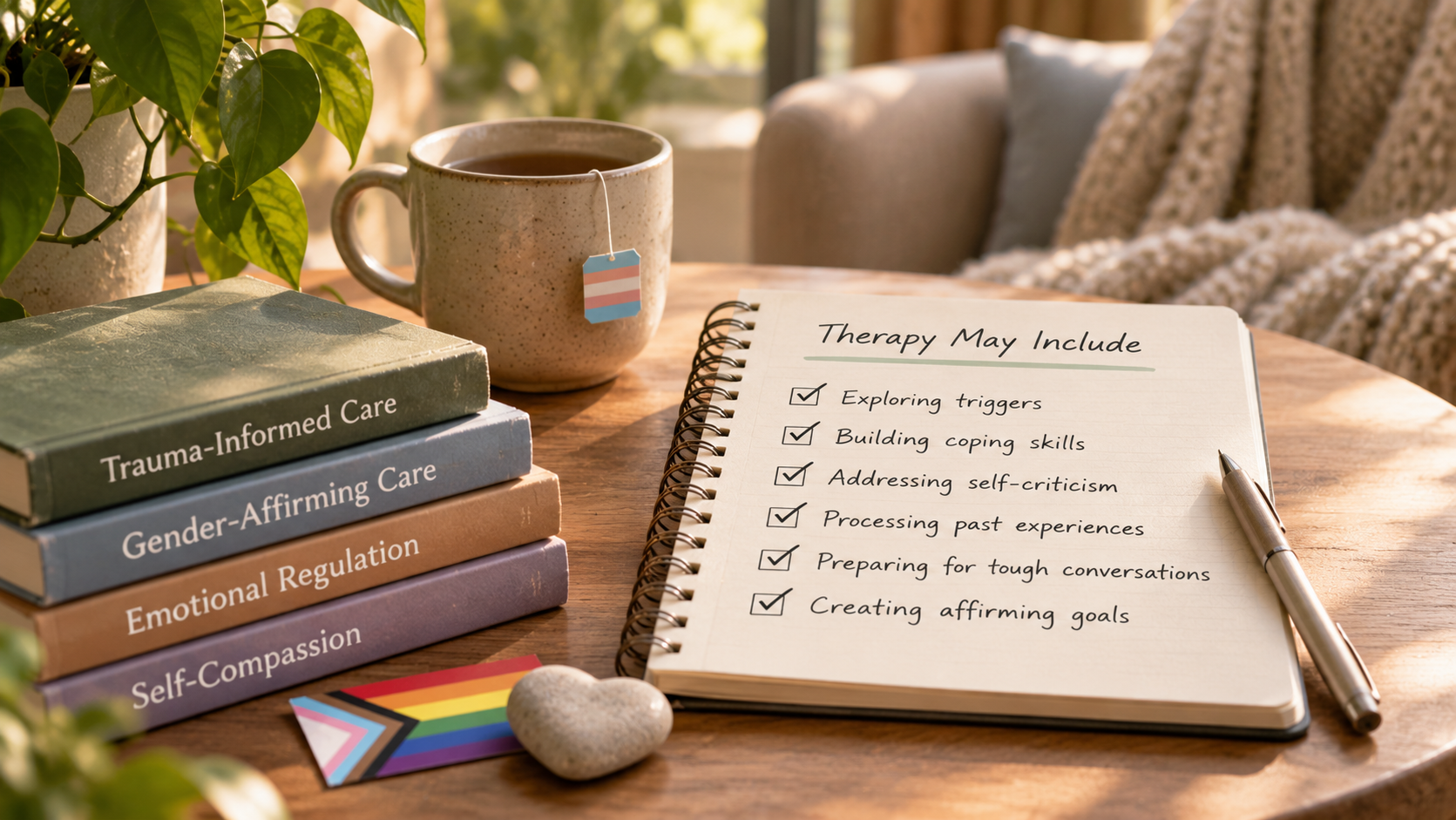
Depending on your needs, therapy may involve recognizing emotional triggers, practicing grounding skills, exploring self-critical beliefs, or preparing for challenging conversations. It can also provide space for grief about relationships or experiences you wish had been different.
Consent and collaboration remain important throughout treatment. You can ask questions, discuss discomfort, and revisit goals. Difficult work may involve manageable discomfort, but the process should include ongoing attention to your readiness, preferences, and support.
Where EMDR May Fit
Eye Movement Desensitization and Reprocessing, or EMDR, is a structured psychotherapy with established evidence for treating PTSD. It involves several phases, including assessment and preparation before processing selected distressing memories.
For someone receiving gender-affirming therapy, EMDR may be considered when traumatic experiences continue to create distress. Possible treatment targets might include an experience of violence or a painful event associated with persistent fear or shame.
EMDR is not intended to change gender identity or direct transition decisions. Its possible role is to address trauma-related distress within a broader, affirming treatment plan.
As an EMDR-trained therapist, Carlos Jr Vargas, LPCC, can discuss whether this approach may fit your needs. Treatment decisions depend on assessment and your goals.
Support That Makes Room for Your Whole Life
Your life includes more than painful experiences. Therapy can also make room for meaningful relationships, creativity, confidence, community, and moments when you feel comfortable being yourself.
Progress might mean communicating a boundary, responding more gently to self-criticism, or feeling better able to choose who receives personal information. It may involve clearer decisions or greater comfort allowing some questions to remain open.
Vargas Counseling & Wellness offers gender-affirming therapy through telehealth throughout California. If you are looking for a supportive place to explore identity, relationships, or the effects of trauma, you can request a free consultation to discuss your needs and whether the practice is a good fit.